
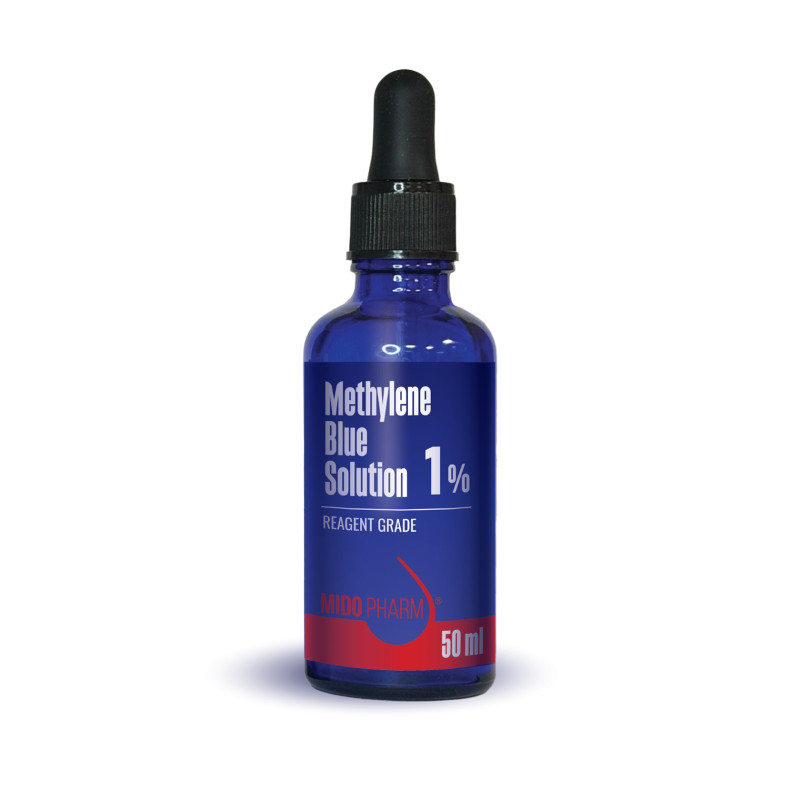
Used in laboratory for staining, diagnostics, analytical procedures and antiseptic treatment.
Methylene blue, chemically known as methylthioninium chloride, is a synthetic dye first synthesized in 1876 by German chemist Heinrich Caro. Originally developed for textile dyeing, it soon gained attention for its unique chemical properties, leading to widespread applications in scientific and industrial research. This vivid blue compound has been utilized in laboratory settings for staining, diagnostics, and various analytical procedures.
Methylene blue is also known to have antioxidant, antidepressant, antimalarial, neuroprotective, and cardioprotective properties. It is FDA approved for the treatment of methemoglobinemia, a blood condition that leads to tissues not getting enough oxygen.
Researchers have found that methylene blue may improve learning, boost memory and protect brain cells in rats with a condition that mimics Alzheimer's disease. Studies in rodents have also found that methylene blue can protect the brain from damage from brain injury.

Specific References
Used in laboratory for staining, diagnostics, analytical procedures and antiseptic treatment.